Every consultation begins with the same lost time. A patient arrives, waits, and then a clinician or a nurse spends the first minutes doing what could already have been done. Vitals are taken in a room set up for them. The same intake questions are asked again. The picture is built from scratch while the clinician's scarce time drains away on collection rather than care.
HumAIns take that entire opening off the clinician's hands. Because they see, hear, and understand, they run the whole pre-consultation and intake through an ordinary interaction. They read the patient's vital signs from a live view, with nothing worn and nothing attached. They gather the patient's history in a natural conversation. And they hand the clinician a complete, ready picture the moment the consultation starts. Here is what they do, stage by stage.
They read the body's vital signs from presence alone
Vitals have always meant contact. A clip on the finger for oxygen, a cuff on the arm, leads on the chest, a device in a room set up to hold it. HumAIns read the same signals directly from a live view of the patient, so the measurements happen inside the intake conversation itself, with nothing worn and nothing attached.
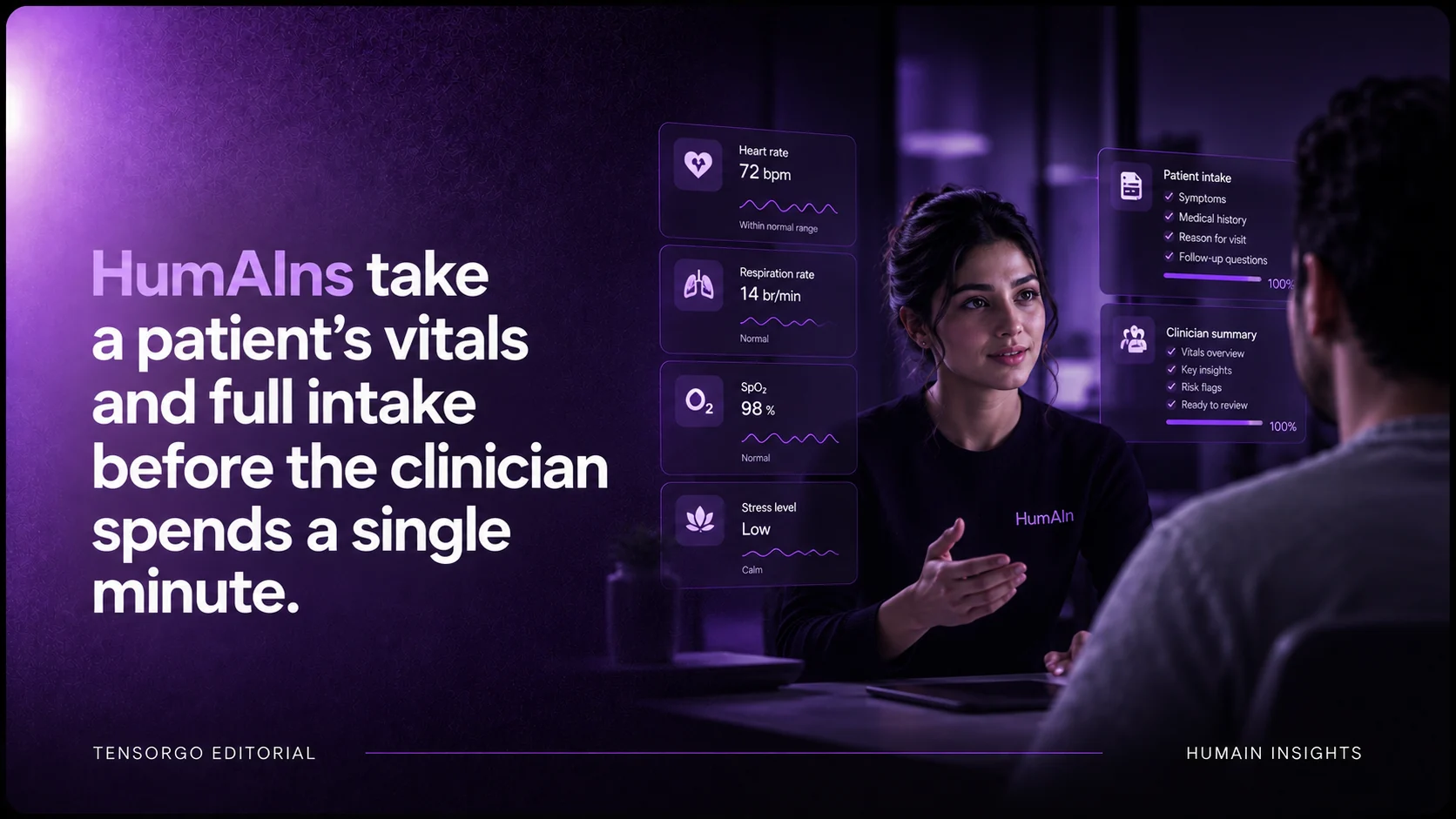
They capture heart rate at the start, so the patient's baseline is on the record before anything else happens, and they track how it moves as the conversation goes on. They read respiration rate as the patient speaks, registering breathing that is fast, shallow, or labored. They read blood oxygen, the SpO2 level, so a low value is flagged at the very beginning rather than found later. And they read heart rate variability and the physiological markers of tension to measure the patient's stress level, rather than leaving it to a clinician's intuition on a busy floor. Every one of these readings that once required a device and a spare pair of hands is taken from the patient simply being present, wherever they are, including from their own home before they ever travel in.
They notice what a rushed intake usually misses
The value of continuous reading is not any single number, it is catching the signal that a hurried, manual intake lets slip.
- A stress level climbing across the conversation is seen as it happens, so a difficult moment is understood rather than overlooked.
- A drop in oxygen or a spike in heart rate is caught the moment it appears, not at the next check.
- A breathing pattern that has shifted from the patient's own normal stands out, because HumAIns hold the baseline to compare against.
Signals that used to depend on someone happening to watch closely are captured every time, for every patient.
They run the full intake as a natural conversation
Vitals are only half of intake. The rest is history, symptoms, and reason for visit, and gathering it usually falls on clinical staff who are needed elsewhere. HumAIns conduct the whole conversation themselves, and they do it thoroughly rather than mechanically.
They gather the patient's symptoms, history, and reason for visit in plain language, in the patient's own tongue. They ask the follow-up questions a good intake requires, adapting to what the patient actually says rather than reading down a fixed form. And they give every patient the same complete, unhurried intake, whether one arrives this hour or fifty do. The information the clinician needs is collected in full, without a member of staff sitting down to collect it.
They hand the clinician a complete picture, ready to act on
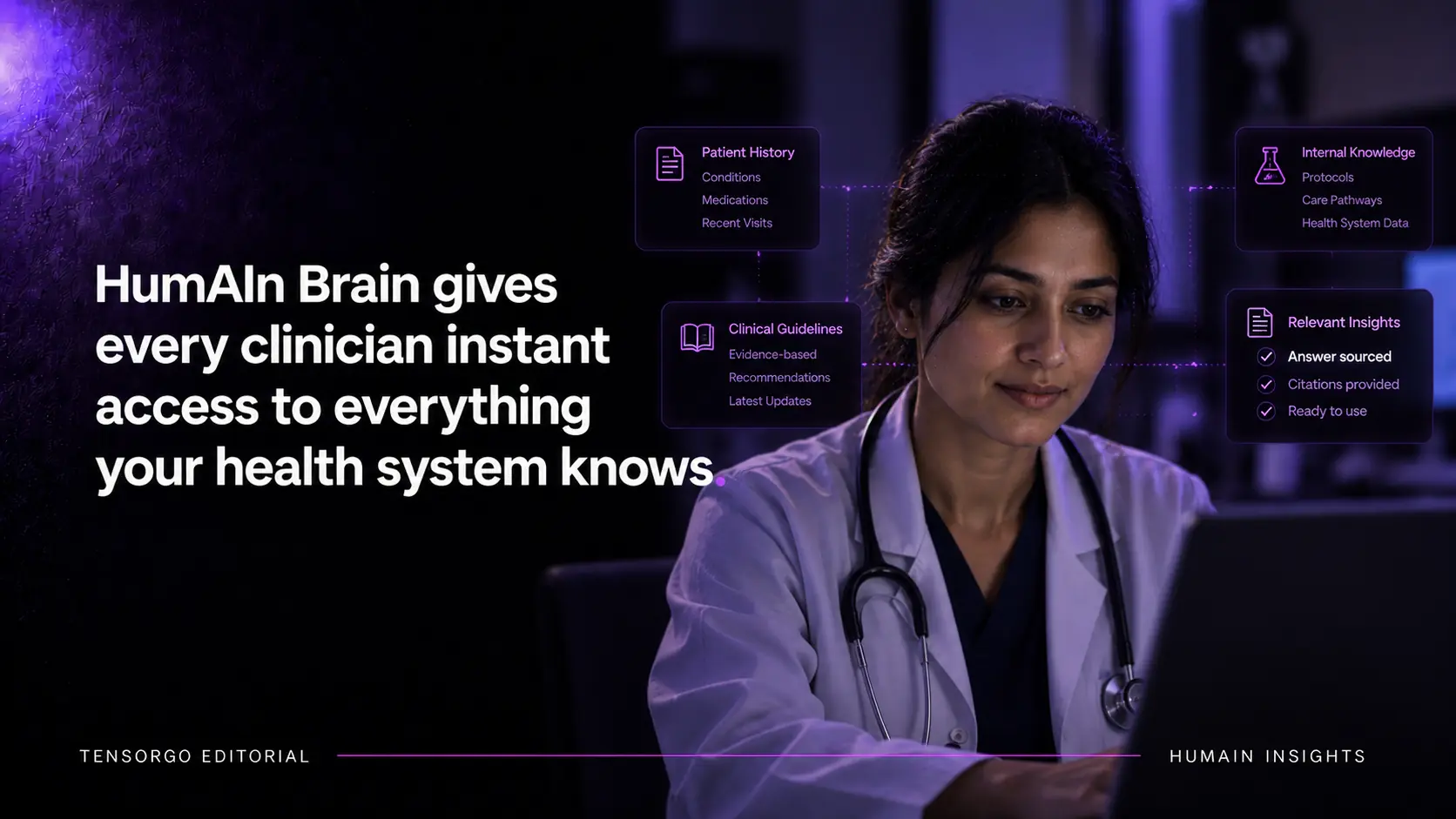
Everything HumAIns capture is only useful if it reaches the clinician clearly. They assemble it into one picture and place it, through HumAIn Brain, against everything already known about the patient.
- They present heart rate, respiration, SpO2, and stress level together with the conversational intake as a single clear summary.
- They set today's readings against the patient's own history, so a change from baseline is visible at a glance.
- They flag what warrants attention, so the clinician's eye goes first to what matters most.
The clinician begins the consultation already informed, spending their time on judgment and care rather than on assembly.
They keep every patient's information inside your walls
Vitals and health history gathered at intake are among the most sensitive data there is, and HumAIns are built for that responsibility. They keep all readings and intake data inside your own secure environment and under your governance, they make each patient's information available only to the clinicians and roles entitled to it, and they meet the privacy and compliance standards healthcare requires without exception. The picture is complete for the care team, and every boundary protecting the patient still holds.
Every consultation starts where it used to be minutes in
For a health system leader, moving the whole pre-consultation and intake ahead of the clinician changes both capacity and care at once. Clinicians reclaim the minutes once lost to taking vitals and gathering history, and across a full schedule those minutes become more patients seen or more time given to each one. Vitals like SpO2 and heart rate can be captured before the patient
even arrives, so a concern is known in advance rather than discovered on the day. And because HumAIns deliver the same intake identically for every patient, its quality no longer depends on how busy the floor is. The consultation begins with the patient fully assessed and the clinician fully informed, at a scale no intake team could ever staff.
Because vitals and health history are deeply personal, they deserve to be seen handled with care before they are trusted. Bring a real intake scenario and watch HumAIn read heart rate, respiration, SpO2, and stress and complete the intake in a live interaction, inside your governance, so you can judge the accuracy and the value for yourself.