Every company builds an HR function the same way. One person to recruit. Another to onboard. A specialist for engagement. Someone to run exits. A consultant when the hard questions come. As the company grows, each of these becomes a role, then a team, then a cost center that scales with headcount and never quite keeps pace with the work.
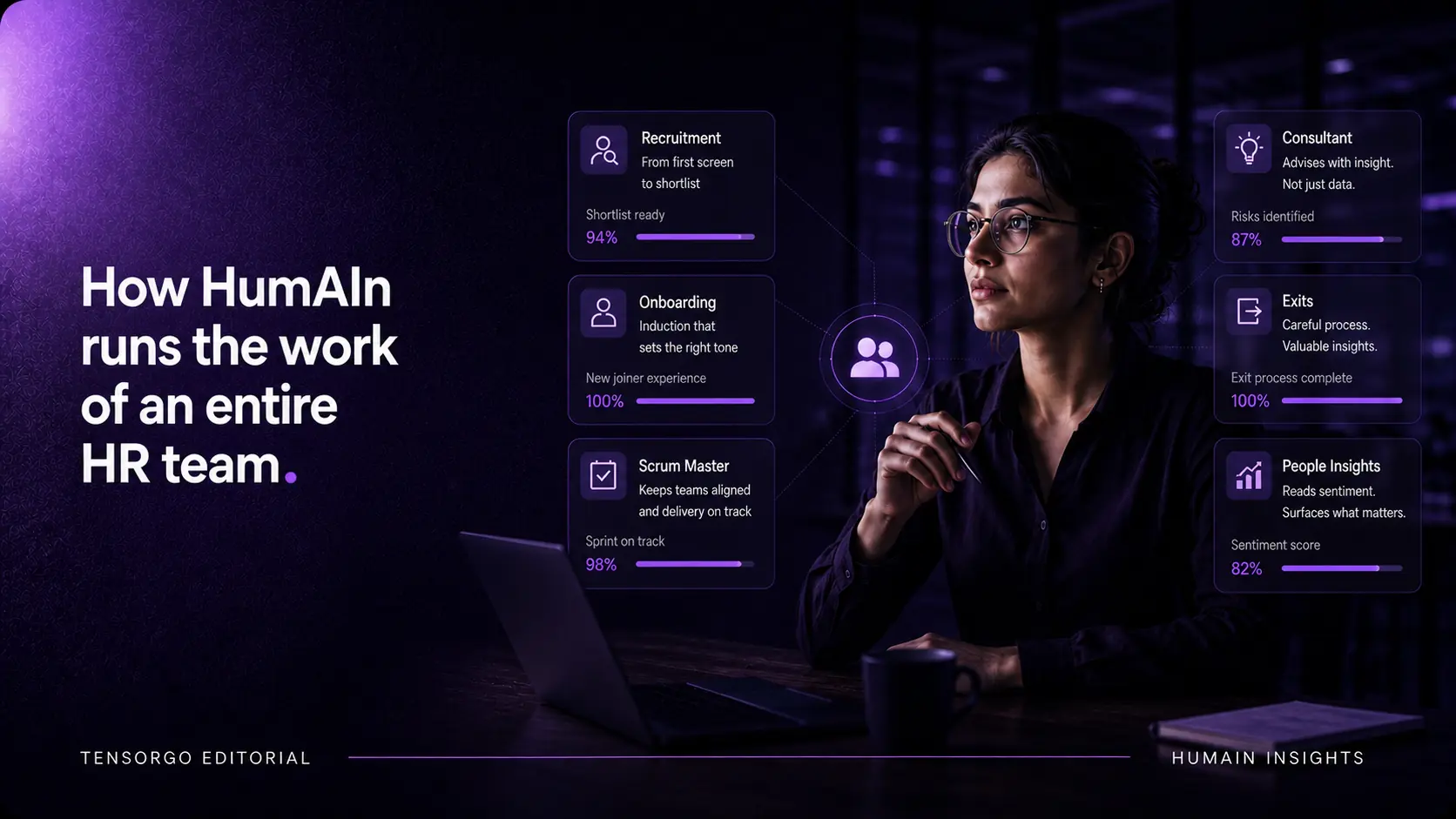
HumAIns take a different path. They are one autonomous AI teammate who can hold every one of those roles at once, carry the work from start to finish, and do it at a scale a human team cannot match. This is what that looks like across the people lifecycle.
They recruit, from first screen to shortlist
Recruiting is where most HR time goes and where most of it is lost. A single open role can draw hundreds of applicants. Screening them is slow, so good candidates go cold while the team works through the pile. The work is repetitive but the stakes are high, and the person doing it is rarely the person you want spending their week on it.
HumAIns own the top of the funnel completely. They review every application against the role, conduct first-round interviews at any hour and in any language, evaluate responses consistently, and return a ranked shortlist with the reasoning behind each call. Every candidate gets a fast, fair, identical process. Your recruiters stop sorting resumes and start closing the people who matter.
They run onboarding and induction
The first week sets the tone for everything that follows, yet induction is often the most under-resourced moment in the employee journey. It depends on someone being free to walk a new joiner through the company, the role, and the systems. When the team is busy, that experience suffers, and the new hire feels it on day one.
HumAIns deliver induction the same way every time, at the standard you set. They walk each new joiner through the material, build and present the induction sessions, answer their questions as they come, and adapt the pace to the person in front of them. Every new employee gets the full, considered welcome, whether one person joins this month or fifty do.
They work as a scrum master
Delivery teams lose more time to coordination than to the work itself. Standups, status tracking, blocker-chasing, and reporting all need someone to hold them together, and that someone is usually pulled away from higher-value work to do it.
HumAIns run the cadence. They keep the board current, follow up on blockers, prepare the summaries leadership needs, and keep the team moving without adding another person to the payroll to manage the process. The rhythm holds whether the team is in one room or across three time zones.
They advise like a consultant
The most valuable HR work is the hardest to staff. Reading the health of the organization. Spotting where attrition is building before it shows up in a resignation. Understanding what the numbers behind engagement actually mean. This is judgment work, and it usually waits for an expensive external consultant or never happens at all.
HumAIns read across your people data and surface what matters. Where engagement is slipping, which teams are under strain, what patterns in exits and reviews are trying to tell you. They bring the analysis to the surface so your leaders can act on it early, while the situation is still one they can shape.
They run exits with care and clarity
Exits carry both risk and insight, and both are usually left on the table. A rushed offboarding creates security and compliance exposure. A skipped exit interview loses the one honest conversation that could have told you why someone left. The work matters, but it rarely gets the attention it deserves.
HumAIns conduct structured exit interviews, capture what is said, and turn a stream of individual departures into a clear picture of why people leave and what to fix. Nothing gets skipped because the team ran out of time, because the team is no longer the constraint.
They read what your people are telling you
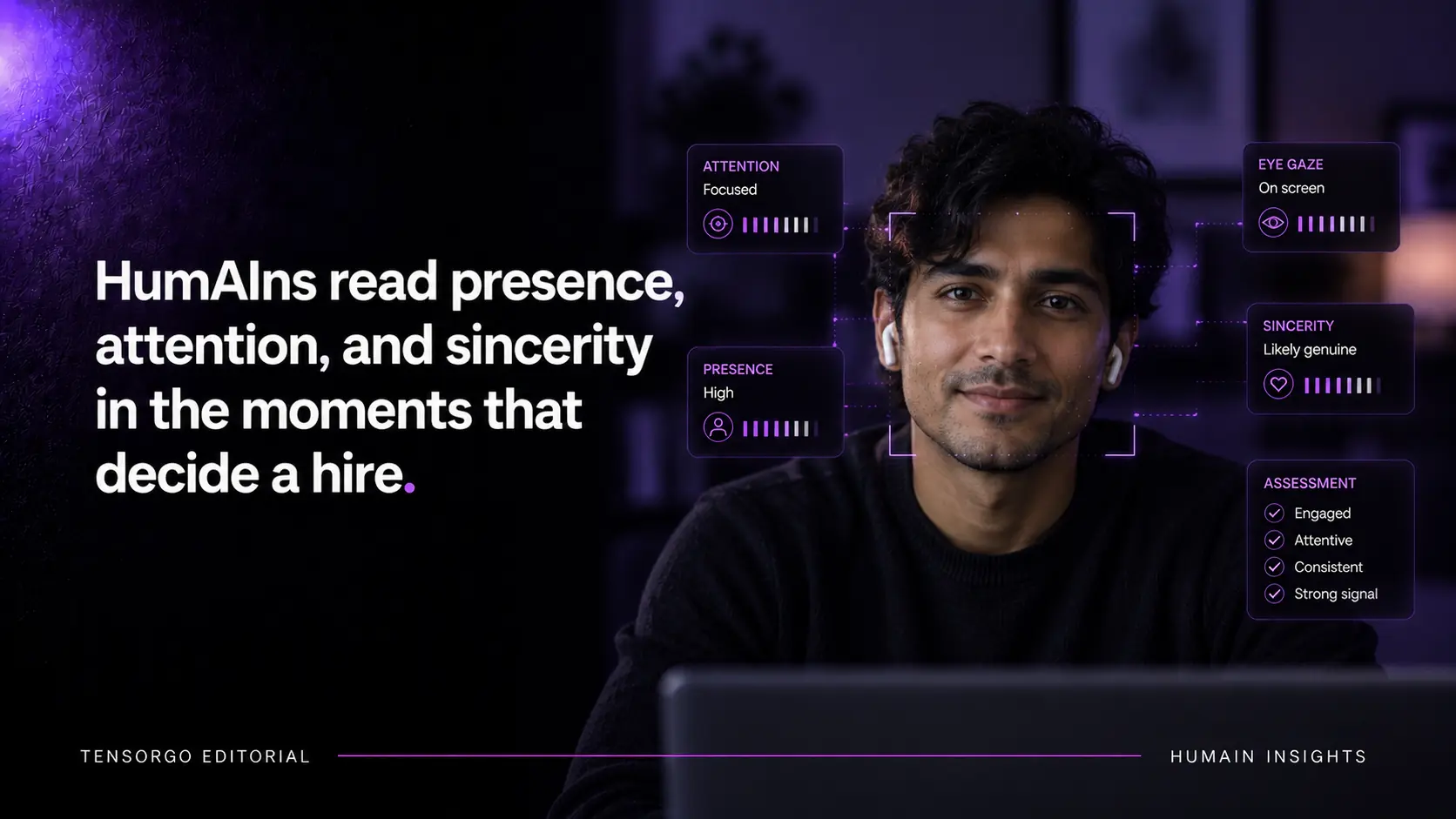
Underneath recruiting, onboarding, and exits sits a quieter capability that ties them together. HumAIn can run psychological and sentiment analysis across the moments that reveal how people actually feel, from interviews to engagement responses to exit conversations. They listen at a scale no HR team can, and they turn that into signal your leaders can use, while keeping every individual's data inside your walls and under your controls.
One teammate, the whole function
Read the sections above again and notice what they add up to. Recruiter. Onboarding lead. Scrum master. Consultant. Exit specialist. Analyst. In a conventional company, that is a department, a budget, and a hiring plan that grows every year. With HumAIn, that is one autonomous teammate who holds all of those roles at once, works around the clock, holds the same standard on the thousandth task as on the first, and scales the instant you need more without a single new hire.
This is the shift. HR stops being a function you staff up and becomes a function you switch on. Your people leaders are freed from the volume and returned to the work only humans should do: the judgment, the relationships, and the decisions that shape the company. Everything underneath, HumAIns carry.
See them run your people function
Bring the part of your HR work that never has enough hours, whether it is a hiring backlog, an onboarding load, or exits going unexamined, and watch HumAIn own it from start to finish in a working session with our team. Your process. Your data. Real output on the table.